
Amy's Animal Hair Salon
TutoTOONSEducational
3.8615.00 Reviews
- Version
- 4.0.50129
- Installs
- 10.00M
- Age Rating
- Everyone
Screenshots
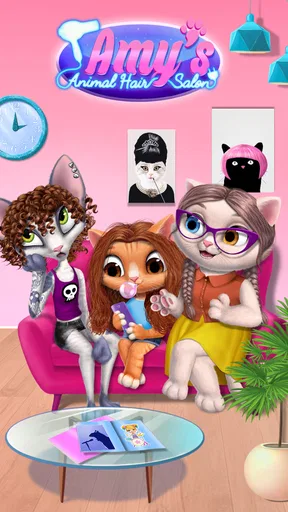

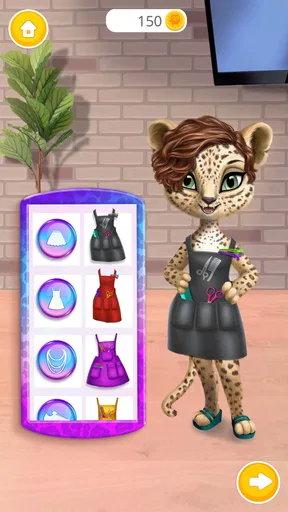
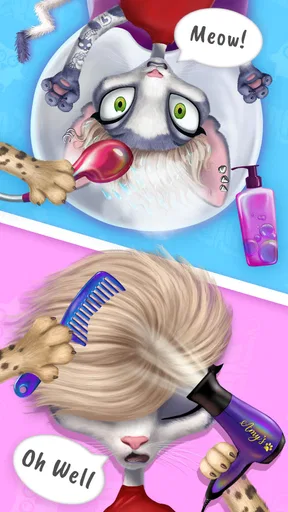
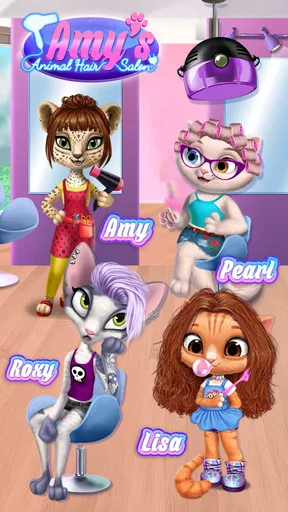
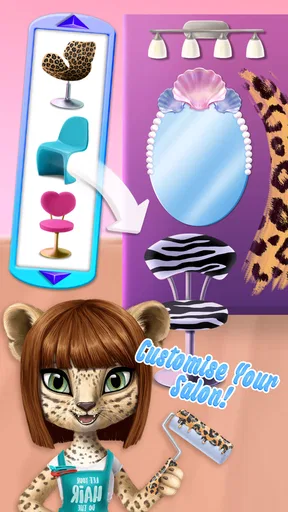

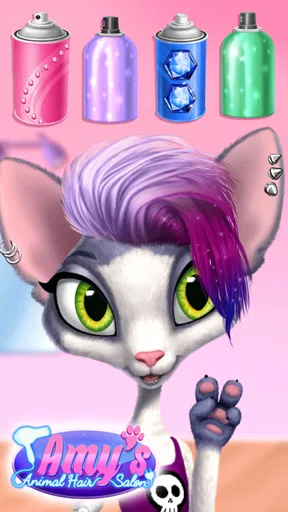
Our Review of Amy's Animal Hair Salon
 Analysis by Appyee
Amy's Animal Hair Salon is the kind of children’s game I would suggest when the goal is gentle, creative play rather than competition or complicated rules. I spent time treating it as a small digital grooming studio, and my overall impression is clear: it works best as a cheerful make-believe activity for younger players who enjoy animals, styling, and immediate visual results. It is not a deep simulation, but it understands that a child can get a lot of satisfaction from choosing a look, changing it, and seeing a pet become a little more expressive.
Developed by TutoTOONS, this free educational game is aimed at Everyone and is available for devices running Android 6.0 or later. Its appeal is easy to understand: the player steps into the role of a pet stylist and spends time making animal characters look cared for and dressed up. That simple idea gives the game a friendly purpose, while the salon setting provides enough structure to keep the activity from feeling like an empty dress-up screen.
What the salon experience gets right
The strongest part of the game is its low-pressure presentation. I never felt that I had to master a difficult control scheme before enjoying it. The central loop is built around looking after an animal and making appearance choices, so a child can experiment without worrying about losing a race, failing a timed challenge, or damaging a long-term save. That makes it especially suitable for short play sessions after school, during a quiet afternoon, or while an adult is nearby.
The salon theme also gives children a reason to think about sequence. A good styling session naturally suggests a beginning, middle, and end: decide what the pet needs, work through the grooming activity, then choose how the finished look should appear. The game does not need to turn this into a formal lesson for that structure to be useful. It encourages attention, hand control, and personal choice in a way that feels like play rather than a worksheet.
I found the visual feedback more important than the educational label alone. When a child changes an animal’s appearance, the result is visible immediately. That quick response helps younger players understand cause and effect: a different choice produces a different look. It also makes the game easy to share with a parent or sibling, because the finished character becomes something to show rather than just another completed screen.
One practical strength is how approachable the premise is for both children who already like pretend salon games and those who are simply fond of animals. A player does not need to know anything about real grooming to begin. The setting supplies a familiar role, but the game keeps the emphasis on imagination. In my view, that is a better fit for early independent play than a more technical pet-care title that expects the child to remember several systems at once.
The game’s educational category should be understood in that modest, hands-on sense. I would not use it as a substitute for a structured learning app, reading practice, or a game built around explicit puzzles. Its value comes from guided creativity and simple interaction. For a young player, that can still be meaningful: choosing carefully, noticing visual differences, and completing a small routine are useful forms of practice even when the game never announces them as lessons.
There is also a useful social angle. A child can play alone, but the salon setup invites conversation. An adult can ask why a certain style was chosen, which animal should be helped next, or what would make the final look feel special. Those questions turn a short session into shared imaginative play. I would especially recommend trying it on a tablet when a child wants to show several styling decisions at once, although the experience remains simple enough for a phone.
Another detail I appreciated is that the game does not depend on a competitive scoreboard to create interest. Many children’s games try to hold attention through races, points, or escalating difficulty. Here, the motivation is more personal: the player wants to see the animal transformed. That makes the experience calmer and gives children who dislike pressure a fairer chance to enjoy it. It also means the game can work as a brief wind-down activity rather than something that encourages one more intense round.
How I would use it in an ordinary day
Imagine a child waiting while dinner is being prepared. They have enough time for a small activity but not for a long story or a complicated adventure. I would hand over the device and let them choose a pet, work through a styling session, and then explain the finished appearance. Once the session ends, the child has a natural stopping point. That matters in family use: a game with a clear sense of completion is easier to put away than an endless stream of unlocks or battles.
It can also fit a rainy-day routine. I would let a child play for a short, agreed period and then ask them to describe the choices they made. The game becomes more valuable when it is treated as a prompt for storytelling: perhaps the pet is preparing for a party, visiting a friend, or getting ready for a special day. The app supplies the visual activity, while the child supplies the narrative.
For parents, the important question is whether the game can be enjoyed without constant explanation. In my experience, the salon concept is clear enough for many younger players to explore on their own, but the first session is still worth sharing. Watching how a child responds tells you whether they enjoy the grooming actions, the styling choices, or simply the animals. That helps determine whether this is a good repeat-play option or merely a pleasant one-time distraction.
The limitations parents should consider
The same simplicity that makes the game approachable also limits its depth. After a child has explored the main styling idea, the experience may begin to feel familiar. Players looking for a long progression system, strategic decisions, or a story with substantial development will probably outgrow it quickly. I would not present it as a complete alternative to a larger children’s game library; it is better understood as a focused activity with a clear theme.
It is also not the right choice for every kind of learner. If a child wants explicit numbers, spelling, problem-solving, or factual information about animal care, this salon format may feel too light. The educational benefit is indirect and creative. A parent expecting measurable academic practice should choose a dedicated learning app instead, while using this one for imaginative interaction and fine-motor engagement.
In-app purchases deserve attention as well. The game is free to install, but optional purchases range from $3.99 to $159.99 per item. That wide range is a strong reason for an adult to review purchase controls before handing over the device. Even when a child is happy with the free experience, an attractive customization option can create pressure to buy. I would treat the game as a supervised family download, not an app to leave entirely unmanaged on a child’s device.
This is also where the game compares differently with ordinary dress-up apps. A pure dress-up title may offer faster access to outfits and visual combinations, while this salon game gives the activity a care-and-transformation frame. That framing is its advantage when a child enjoys pretending to help an animal. On the other hand, a dress-up alternative may be better for a player who wants to focus only on fashion choices and move rapidly between looks.
Compared with a virtual-pet game, the salon experience is more concentrated. A virtual pet usually asks the player to return for several kinds of care, whereas this title keeps the attention on beauty-salon play. That makes it easier to understand and less demanding as a daily responsibility, but it can also make it less compelling for children who want feeding, exploration, collecting, or a continuing relationship with one character.
Parents should also think about the child’s tolerance for repetition. The game’s charm comes from repeating a pleasant routine with different creative decisions. Some children find that relaxing; others need new challenges to stay interested. My advice is to watch for whether the child is inventing new stories and combinations or simply tapping through the same actions. If the latter happens quickly, another educational game with puzzles or progression may offer better long-term value.
Small strategies that make play more rewarding
I found that the best way to avoid aimless tapping was to give each session a simple theme before starting. “Create a look for a birthday,” “make the pet ready for a rainy day,” or “choose a style that matches a favorite color” turns the available choices into a small design task. This does not add a new feature to the game; it changes how the player approaches the existing salon activities and encourages more deliberate decisions.
A second useful approach is to ask the child to compare two finished looks rather than asking which one is “best.” That wording leaves room for personal taste and helps the child explain choices. It can lead to useful vocabulary about colors, shapes, textures, and feelings without making the session resemble a lesson. For siblings, each child can create a different style and describe the situation their pet is preparing for.
I would also use the game as a stopping-point activity rather than an unlimited background distraction. Because the salon routine has a natural beginning and end, it works well when a parent sets a goal of one completed styling session. This is more practical than allowing open-ended play and then trying to interrupt at an arbitrary moment. The child knows what they are finishing, and the adult has a clear reason to ask for the device back.
One trade-off is that adult involvement improves the creative value but is not always necessary. Independent play is possible for a child who can follow the visual flow, yet shared play produces more storytelling and reflection. Families should not feel they are using the game incorrectly if they simply let a child explore, but they should know that the richest benefit comes from occasionally discussing the choices rather than treating the app as a silent babysitter.
Who should install it
I think the best audience is younger children who like animals and enjoy making visual choices without pressure. It is particularly suitable for a first salon-themed game, a calm activity between more demanding tasks, or a shared parent-and-child session. The Everyone age rating supports its broad family positioning, while the straightforward concept makes it less intimidating than games built around reading-heavy instructions or complex menus.
It may also suit a child who becomes frustrated by failure. Since the emphasis is on creating a look rather than beating an opponent, the emotional tone is gentler. That does not mean every child will enjoy it, but it removes one common barrier to participation. A child can spend time exploring the salon idea at their own pace instead of feeling behind more experienced players.
I would skip it, or at least place it lower on the download list, for older children who want a substantial challenge. It is also a weak match for anyone specifically searching for detailed animal facts, realistic grooming technique, or a deep management simulation. In those cases, a more specialized educational title or a richer pet-care game would provide a clearer reason to keep returning.
The game has attracted a sizeable audience, with over ten million installs, and its average rating is 3.8 from around fifteen thousand ratings. I read that as evidence of broad interest rather than a guarantee that every family will love it. The response makes sense to me: the concept is immediately appealing, but the limited depth and purchase considerations will matter differently from one household to another.
It was released on June 20, 2018, and the current version is 4.0.50129. Those details are useful when checking whether a device is compatible, especially for families using an older phone or tablet. The minimum requirement of Android 6.0 keeps it accessible to many older devices, although I would still make sure the game runs comfortably before planning to use it as a regular travel activity.
My final recommendation
After using it as a children’s salon game rather than expecting a full educational curriculum, I came away positive but measured. Its best qualities are clarity, gentle creative play, and a theme that gives styling choices a sense of purpose. The strongest practical benefit is that a child can complete a contained activity and talk about the result. That is more useful than a generic stream of tapping, even if the underlying play remains simple.
The weaknesses are equally clear. Repetition may reduce its appeal for children who need constant novelty, and the optional purchase range means adults should take control of spending before play begins. The game also cannot replace a dedicated learning app, a story-driven adventure, or a deeper virtual-pet simulation. Choosing it makes sense when the desired experience is specifically animal grooming and appearance-based creativity.
For that audience, I would recommend giving it a try. I would install it for a younger animal lover, set sensible purchase restrictions, and introduce it through a shared styling session. If the child starts inventing stories and experimenting with different looks, it has found its role. If they immediately ask for puzzles, exploration, or more involved care, I would move on to another category rather than forcing this one to provide something it was not designed to be.
My verdict: this is a friendly, accessible salon activity with genuine value as creative children’s play, but its appeal depends on enjoying repetition and visual make-believe. As a free download from TutoTOONS, it is worth considering for the right child; just approach it as a focused pet-styling game, not as a deep lesson or an endlessly expanding adventure.
Verdict
Strengths of Amy's Animal Hair Salon
- Creative grooming activities encourage imagination and self-expression.
- Bright visuals and playful animations make it appealing to younger children.
- Simple touch controls are easy for preschoolers to understand.
- Animal characters offer a friendly, entertaining experience.
- Short activities work well for quick, casual play sessions.
Limitations of Amy's Animal Hair Salon
- Some content may feel repetitive after several play sessions.
- The game offers limited challenge for older children.
- In-app purchases may be present depending on the version.
- Requires a compatible device with enough storage space.
- Children may need supervision when accessing ads or external links.
Other Releases by TutoTOONS
View All
Fluvsies - A Fluff to Luv
Educational4.1

Sweet Baby Girl Cleanup 5
Educational3.8

Smolsies - My Cute Pet House
Educational4.1

Bunnsies - Happy Pet World
Educational4.0
Similar Picks in This Category
View All
Little Panda Policeman
BabyBus4.0

Monster Trucks Game for Kids 2
Raz Games4.1

Little Panda's Chinese Recipes
BabyBus4.4

Little Panda's Restaurant
BabyBus4.4

Little Panda's Ice Cream Games
BabyBus4.3

Baby Panda Care
BabyBus3.8
Frequently Asked Questions
What is Amy’s Animal Hair Salon?
Amy’s Animal Hair Salon is a casual makeover and pet-care game where players look after adorable animals and give them stylish transformations. You can wash, brush, trim, color, and decorate different pets while completing salon activities. The game is designed for children and casual players who enjoy creative play, simple controls, and cute animal characters rather than challenging strategy or competition.
What can you do in Amy’s Animal Hair Salon?
The game includes several grooming and styling activities for animal customers. Depending on the available salon, you may clean dirty fur, dry and brush animals, cut or style their hair, apply colors, choose accessories, and create a finished look. Players can experiment with different combinations and enjoy a relaxed, interactive experience without needing advanced gaming skills or complicated instructions.
Is Amy’s Animal Hair Salon suitable for children?
Amy’s Animal Hair Salon is generally suitable for young children because its gameplay is colorful, gentle, and easy to understand. Most actions are performed by tapping, dragging, or choosing items on the screen, so children can play independently after a short introduction. Parents should still review the app’s age rating, advertising, in-app purchase settings, and privacy information before allowing regular use.
Does Amy’s Animal Hair Salon require an internet connection?
Basic salon activities may be playable without a constant internet connection, but the exact offline experience can depend on the version installed and the device being used. Internet access may be required for advertisements, optional purchases, updates, or additional content. If you want to play offline, it is best to test the game after installation and check whether all desired features remain available.
Is Amy’s Animal Hair Salon free to download?
Amy’s Animal Hair Salon can generally be downloaded at no initial cost, but free access may include advertisements, locked items, or optional in-app purchases. Some styling tools, animals, accessories, or extra content may require payment, depending on the edition and platform. Before downloading, check the official store listing for current pricing, supported devices, age rating, and purchase information.
Play our best games!


